Why Electrical Planning Makes or Breaks a Kitchen Remodel
A kitchen renovation is exciting, but the electrical work happening behind your new cabinets and countertops is what keeps everything safe and up to code. If you're mapping out a project in Fort Lee, Palisades Park, Secaucus, or anywhere across Bergen County, understanding the electrical side early can save you from costly surprises later.
At Hi Tech Electric, we've wired kitchens throughout North Jersey, and the same questions come up again and again. Below, we break down the key kitchen remodel electrical requirements Bergen County homeowners need to plan for before the first cabinet goes up.
Dedicated Circuits: The Foundation of a Modern Kitchen
Today's kitchens run far more appliances than the kitchens of a few decades ago. To handle that load safely, electrical code requires several dedicated circuits so no single line gets overwhelmed.
During a typical remodel, you'll usually need dedicated circuits for:
- Small appliance circuits — at least two 20-amp circuits serving countertop outlets
- Refrigerator — its own dedicated circuit to protect against nuisance trips
- Dishwasher — a separate circuit, often shared with or independent from the garbage disposal
- Garbage disposal — its own dedicated line
- Electric range or oven — a heavy-duty 240-volt circuit
- Microwave — especially built-in or over-the-range models
Skipping dedicated circuits is one of the most common issues we find in older homes across Bergen County. Adding them during a remodel is far easier than retrofitting later.
Outlet Placement Rules You Can't Ignore
Outlet placement isn't just about convenience — it's governed by specific code requirements designed to keep you from stretching cords across a wet or hot workspace.
Countertop Outlet Spacing
Along your countertops, receptacles must be placed so that no point along the wall is more than a set distance from an outlet. In practical terms, this usually means an outlet every few feet. Any countertop wide enough to be a usable work surface also needs its own receptacle.
GFCI Protection
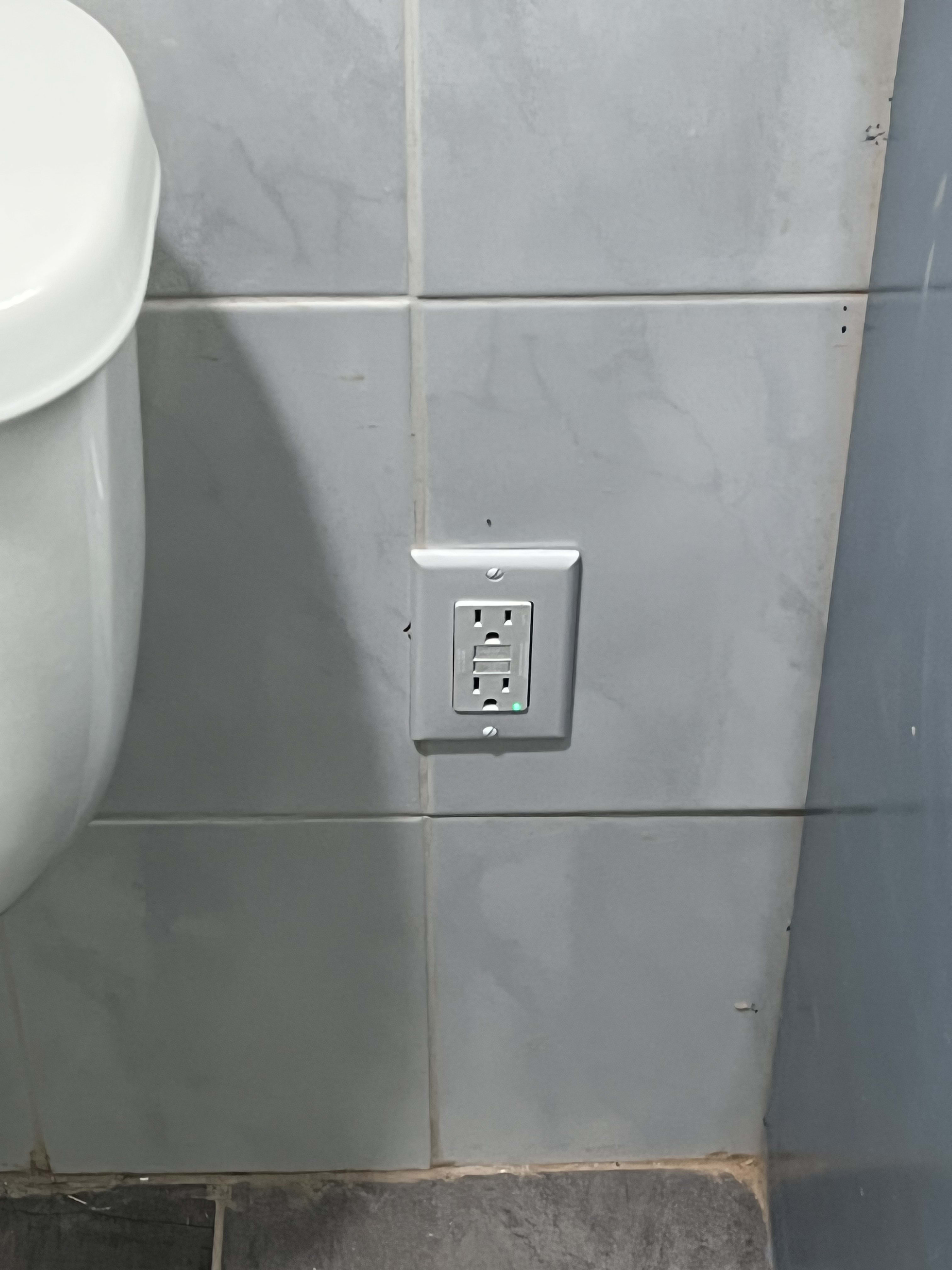
All kitchen countertop outlets must be GFCI protected. Ground-fault circuit interrupters cut power instantly if they detect a fault, which is critical anywhere water and electricity are close together. This is non-negotiable in a modern kitchen.
Islands and Peninsulas
Islands and peninsulas have their own outlet requirements. If your remodel adds an island — a popular upgrade in North Jersey homes — plan for receptacles that meet current code while keeping the layout clean.
Hood Ventilation Wiring
A proper range hood does more than clear smoke; it removes grease, moisture, and cooking odors. Whether you're installing a ducted or ductless model, the ventilation system needs correct wiring to run safely and quietly.
Key considerations include:
- Providing an appropriately rated circuit for the hood's motor and lighting
- Ensuring wiring is rated for the location and any heat exposure
- Coordinating outlet or hardwire placement so the connection stays hidden and accessible
- Matching the electrical setup to the hood's manufacturer specifications
Powerful, high-CFM hoods can draw significant current, so it's worth confirming your panel and circuit can support the model you've chosen before purchasing.
Does Your Panel Have Enough Capacity?
All those new circuits have to originate somewhere. If your home in Fort Lee or Secaucus still has an older, smaller service panel, a kitchen remodel may push it past its safe capacity.
A licensed electrician can perform a load calculation to determine whether your existing panel can handle the added circuits or whether a service upgrade is needed. Discovering this during planning — rather than mid-project — keeps your timeline and budget on track.
Permits and Inspections in Bergen County
Electrical work during a kitchen remodel almost always requires a permit. Permits exist to protect you: they ensure the work is inspected and meets code, which matters for safety and for the resale value of your home.
Here's what homeowners should know:
- Permits are typically required for new circuits, panel work, and significant rewiring
- Inspections verify the work meets current electrical code
- Unpermitted work can create problems when you sell or refinance your home
Requirements can vary slightly between municipalities, so working with an electrician familiar with the permitting process across Bergen County, Palisades Park, and the surrounding North Jersey area helps everything move smoothly.
A Few Smart Extras Worth Considering
Since the walls are already open, a remodel is the ideal time to add upgrades you'll appreciate for years:
- Under-cabinet lighting for better task illumination
- Recessed lighting on dimmers for flexible ambiance
- USB or USB-C outlets for charging devices on the counter
- Additional outlets for coffee stations, air fryers, and other gadgets
Planning these now costs far less than adding them after the drywall is finished.
Get Your Kitchen Remodel Started Right
A beautiful kitchen deserves an electrical system that's safe, code-compliant, and built for the way you actually cook and live. From dedicated circuits and outlet placement to hood ventilation and permits, getting the details right from the start makes all the difference.
If you're planning a project in Fort Lee, Palisades Park, Secaucus, or anywhere in Bergen County and North Jersey, the team at Hi Tech Electric is here to help. Reach out today to talk through your remodel and get your electrical planning on the right track.